A ponytail may look simple, but anyone who’s struggled with bumps, sagging, frizz, or uneven tension knows it’s not. The truth is: there is no single “perfect ponytail.” The perfect ponytail depends on how your hair behaves not just how it looks.
This guide breaks the ponytail down into technique, placement, and control, so you can get a polished result no matter your hair type.
The Ponytail Rule Most People Miss
The biggest ponytail mistake isn’t the elastic it’s treating all hair the same.
Every hair type responds differently to:
- Tension
- Product
- Brush type
- Placement
Once you understand that, ponytails stop slipping, frizzing, or flattening.
Step One: Choose the Right Placement (It Changes Everything)
Before touching a brush, decide where the ponytail should sit.
- High ponytail: lifts the face, adds energy, shows texture
- Mid ponytail: balanced, everyday, safest for most hair types
- Low ponytail: sleek, elegant, least tension
If your ponytail keeps drooping, it’s usually placed too high for your hair’s weight or texture.
Step Two: Prep Your Hair Based on Texture (Not Trend)
Fine or Thin Hair
Fine hair needs grip, not oil.
Do this:
- Add light texture (dry shampoo or texturizing spray)
- Avoid heavy conditioners near the roots
- Use a soft brush, not a dense one
Goal: volume and hold without slipping
Thick or Dense Hair
Thick hair needs control and balance.
Do this:
- Detangle in sections
- Smooth lightly with a cream or serum
- Secure with a strong elastic (fabric over rubber)
Goal: even tension without pulling
Curly or Wavy Hair
Curls don’t like being over-brushed.
Do this:
- Smooth with fingers or a wide-tooth comb
- Decide early: sleek or textured (don’t mix)
- Secure gently to avoid flattening curls
Goal: definition without frizz
Coily or Highly Textured Hair
Shrinkage and tension matter most here.
Do this:
- Stretch hair slightly before styling
- Use moisturizing products, not dry ones
- Secure without over-tightening edges
Goal: shape, not strain
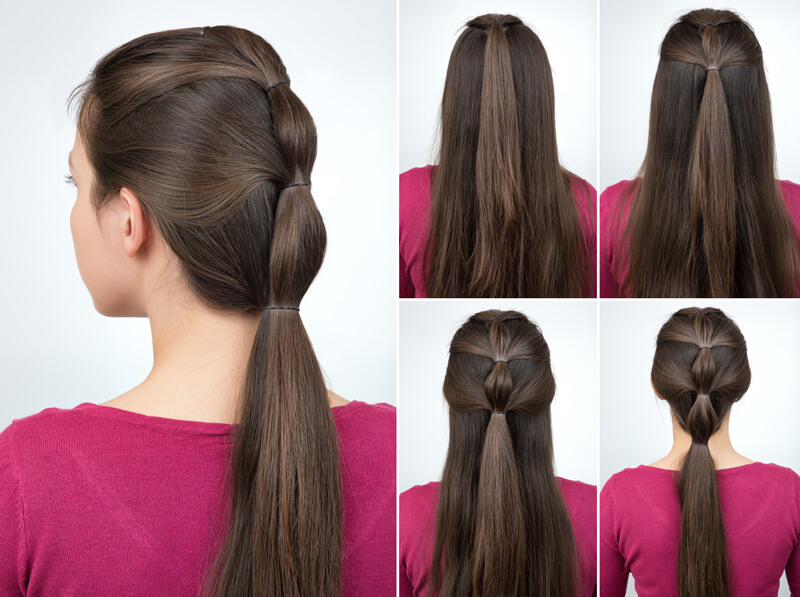
Step Three: The Brush Technique That Changes Everything
Instead of brushing straight back:
- Brush hair forward first
- Then guide it back into place
- Smooth only the surface layer
This prevents bumps and uneven tension especially on fine and wavy hair.
Step Four: Secure Without Damage
Elastic choice matters more than people think.
Best options:
- Fabric-covered elastics
- Spiral hair ties for fine hair
- Thick seamless bands for heavy hair
Avoid:
- Bare rubber
- Over-tightening (it causes breakage and headaches)
Wrap the elastic once fewer than you think tight isn’t better.
Step Five: Finish Based on the Look You Want
- Polished ponytail: light serum + smoothing spray
- Textured ponytail: dry texture spray on lengths
- Voluminous ponytail: gently lift at the crown after securing
A perfect ponytail looks intentional not stiff.
Common Ponytail Problems (and Quick Fixes)
- Bumps: too much brushing, not enough prep
- Sagging: wrong placement or weak elastic
- Frizz: brushing curls dry or using the wrong product
- Headache: ponytail too tight or too high
Fix the cause, not the symptom.
A perfect ponytail isn’t about copying a style it’s about working with your hair instead of against it. When placement, prep, and tension match your hair type, even the simplest ponytail looks effortless and elevated.
Master this, and you’ll never underestimate the ponytail again.